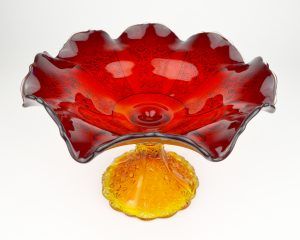
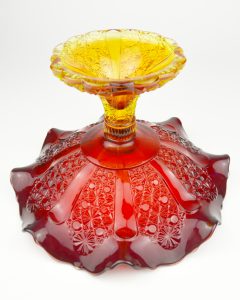
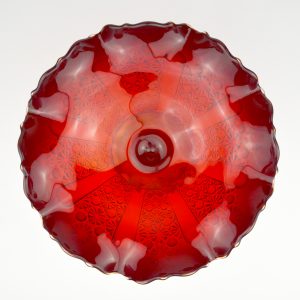
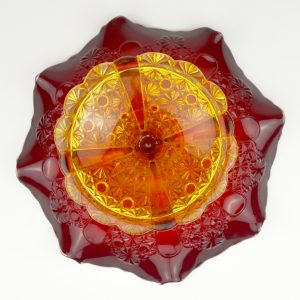
Amberina Glass: A Glowing Reflection of 19th-Century Innovation – Red and Yellow Glass Compote with Ruffle Top and Daisy and Button Pattern

Amberina glass is a stunning art glass known for its distinctive color gradient, transitioning smoothly from deep red at the top to rich amber or golden yellow at the base. First developed in the late 19th century by the New England Glass Company around 1883, this unique glass became a symbol of American creativity and craftsmanship during the Victorian era.
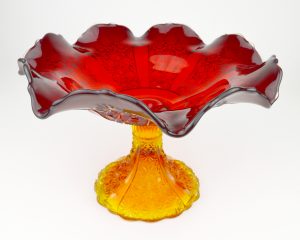
BUY NOW! Gorgeous two tone glass compote with brilliant fiery red and yellow color. Very large and wide bowl. Great showy serving piece for a party or display. Approximate dimensions: 12″ (diameter) x 8″ (height). c vintage. Unknown origin.

The signature color effect of Amberina was achieved through precise control of heat and metallic oxides—particularly gold—during the glassmaking process. When reheated, the glass would shift in hue, creating the warm, glowing two-tone effect that collectors admire today. Each piece required great skill, as the delicate transition depended on the artisan’s timing and mastery of temperature.
Amberina glass was used to craft a variety of items, including vases, pitchers, tumblers, and lamps. Its radiant beauty made it a popular choice for both decorative and functional household objects. Later, similar styles such as Blue Amberina and Reverse Amberina emerged, reflecting continued experimentation in color and design.
Today, authentic Amberina pieces are highly collectible, treasured for their historical significance and mesmerizing beauty—a perfect marriage of science, art, and the timeless allure of glowing glass.
This item is currently available in our eBay store.

References:

  1. Mid-Century Modern Glass in America by Dean Six & Paul Eastwood
  2. Elegant Glass: Early, Depression, & Beyond by Debbie & Randy Coe
  3. Vintage Living: Creating a Beautiful Home with Treasured Objects from the Past by Bob Richter
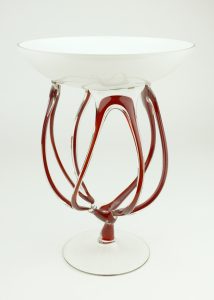
Exploring the Beauty of Glass Art: Work by Makora Krosno – Red and White Hand Blown Art Glass Compote

Glass art has a timeless allure—an alchemy of fire, sand, and human creativity that transforms simple materials into luminous works of beauty. Among the many forms glass artistry takes, the compote stands out as a particularly elegant example. Traditionally used to serve fruit or display sweets, compotes are beloved today not only for their function but also for their sculptural presence. Their pedestal bases, flared bowls, and sweeping lines make them a favorite among collectors of vintage and contemporary glass alike.

dsc_9720
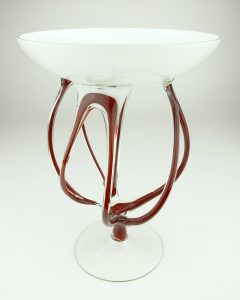
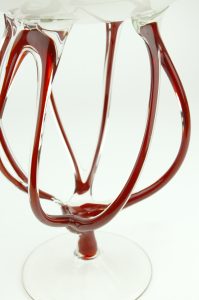
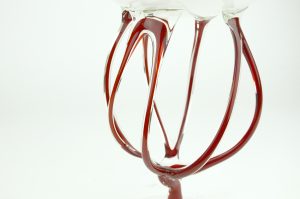
SOLD OUT Gorgeous piece of glass art.  Compote is cherry red clear glass with opaque milk glass-like bowl.  Unusual “jellyfish” style design.  Approximate dimensions: 8 1/2″ (maximum diameter) x 11 1/4″ (height). Made in Poland.

Compotes often reflect the aesthetics of the era in which they were made. From delicately cut crystal of the early 20th century to bold mid-century modern shapes and vibrant studio glass forms, these pieces embody both utility and artistry. They are equally at home as centerpieces, decorative accents, or display pieces that highlight the craftsmanship of the glassmaker.

dsc_9713_small

One name frequently associated with fine European glass is Makora Krosno, a studio connected to the renowned Polish glassworks in Krosno, a region long celebrated for its skilled artisans. Makora Krosno became known for producing distinctive art glass, particularly during the late 20th century. Their pieces often feature fluid, organic shapes, rich jewel-toned colors, and layered or cased glass techniques that create depth and movement within the piece.

dsc_9715

Collectors appreciate Makora Krosno for the way the studio blended modern artistic sensibilities with traditional glassmaking expertise. Many of their works—vases, bowls, and sculptural forms—showcase the expressive possibilities of hand-blown glass. While not every piece is signed, Makora glass is typically identifiable by its vibrant hues, generous use of color gradients, and masterful control of molten glass.

dsc_9718

Whether displayed on a shelf or paired with vintage décor, Makora Krosno art glass and classic compotes offer a striking way to bring the beauty of glass craftsmanship into everyday life. Their artistry endures, shimmering with the same light and imagination that shaped them.

Items like this are currently available in our eBay store.

References:

  1. Carved & Decorated European Art Glass by Ray Grover and Lee Grover
  2. European Glass in the J. Paul Getty Museum by Catherine Hess and Timothy Husband
  3. Glass: A Short History by David Whitehouse