Nippon China: A Legacy of Japanese Craftsmanship – Set of Nippon Chocolate Pot with Four (4) Cups and Saucers

Nippon China refers to fine porcelain and ceramics produced in Japan between 1891 and 1921, a period when export goods were marked “Nippon,” the Japanese word for Japan. These elegant pieces were created primarily for Western markets, showcasing exquisite craftsmanship, delicate hand-painted designs, and vibrant colors that reflected both Japanese artistry and Western tastes.
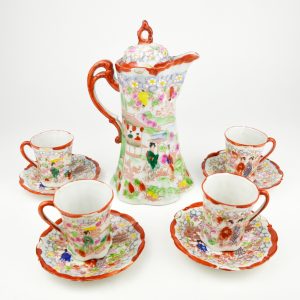
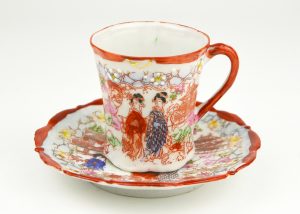
BUY NOW! Gorgeous colorful piece of Nippon porcelain. Hand-painted with gold gilding and white enamel. Manufacturer’s mark, “Made in Japan.” Approximate dimensions: CHOCOLATE POT with lid: 5 1/8″ (max diameter) x 9 1/2″ (total height); CUPS: 2 1/2″ (max diameter), 3 1/4″ (max diameter with handle) x 2 3/4″ (height); SAUCER: 5″ (max diameter). c. antique or vintage. Made in Japan.

During this era, Nippon China was produced by several renowned companies, including Noritake, Morimura Brothers, and others. The wares ranged from ornate vases and tea sets to intricate figurines and tableware. Common decorative styles included raised gold moriage, scenic landscapes, florals, and elaborate gilding, often highlighted by soft pastel glazes or deep cobalt blues.

After 1921, U.S. import regulations required goods from Japan to be marked “Japan” or “Made in Japan,” officially ending the “Nippon” mark era. Today, genuine Nippon-marked pieces are highly collectible, valued for their beauty, historical significance, and the exceptional skill of the artisans who created them.
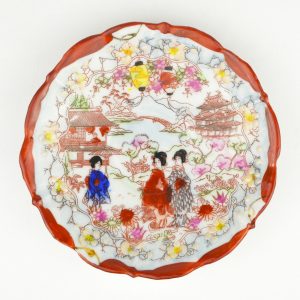
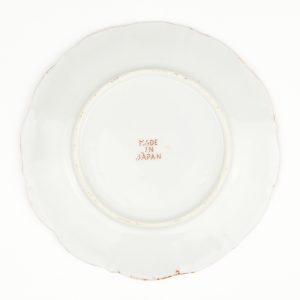
Collectors seek authentic markings and hand-painted quality when identifying true Nippon China, making each piece not just a functional item, but a cherished symbol of Japan’s cultural exchange and enduring artistic tradition.

Antique Chocolate Pots: Elegant Remnants of a Sweet Tradition

Antique chocolate pots are beautiful relics from a bygone era when drinking chocolate was a luxurious ritual rather than an everyday indulgence. Originating in Europe during the 17th century, these elegant vessels were designed specifically for preparing and serving hot chocolate—a fashionable beverage enjoyed by the wealthy.
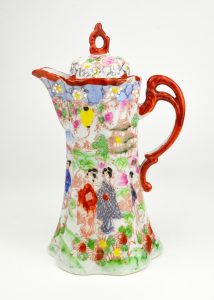
Unlike teapots or coffee pots, chocolate pots were crafted with distinct features. Most notably, they often included a hinged or removable lid with a hole for a wooden or metal whisk, called a “molinillo” or “muddler,” used to froth the chocolate mixture before serving. Their graceful spouts and ornate handles were designed for both function and beauty, often reflecting the artistry of the silversmiths or porcelain makers who produced them.

Materials ranged from silver and pewter to fine porcelain, with famous manufacturers like Limoges, Meissen, and Royal Vienna creating stunning examples. Many were richly decorated with gilding, hand-painted florals, or romantic scenes, making them both utilitarian and decorative.
Today, antique chocolate pots are prized collectibles. They offer a glimpse into historical dining customs and the evolution of European craftsmanship, serving as elegant reminders of how something as simple as a cup of chocolate once symbolized refinement, comfort, and social prestige.

This item is currently available in our eBay store.

References:

  1. Collector’s Encyclopedia of Nippon Porcelain by Joan Van Patten
  2. The Wonderful World of Nippon Porcelain by Kathy Wojciechowski
  3. Japanese Porcelain 1800-1950 by Nancy Schiffer
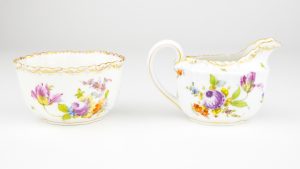
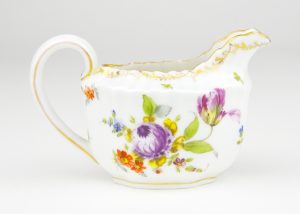
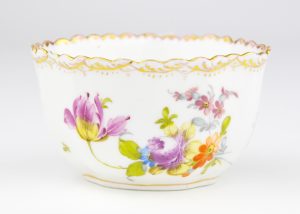
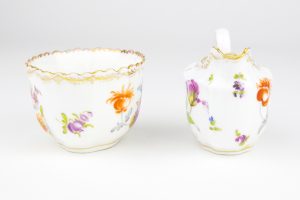
Timeless Elegance: The Enduring Beauty of Dresden Fine China – Dresden RK Creamer and Sugar Bowl with Floral Pattern and Gold Gilding

Dresden fine china has long captured the imagination of collectors, decorators, and anyone who appreciates the artistry of delicate porcelain. Rooted in the rich ceramic traditions of 18th-century Germany, Dresden pieces are known for their exquisite hand-painted designs, intricate detailing, and unmistakable elegance. The name “Dresden” evokes visions of soft florals, gold accents, and graceful shapes—elements that transformed everyday tableware into miniature works of art. Even today, centuries after its beginnings, Dresden china continues to symbolize refinement and craftsmanship that stands apart in a world of mass-produced goods.

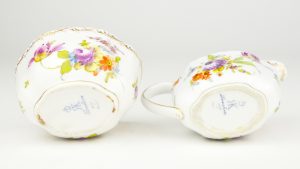
BUY NOW! A Dresden RK creamer and sugar bowl set with a floral pattern showcases the delicate hand-painted artistry that defines classic Dresden porcelain. The vibrant flowers are complemented by intricate gold gilding, adding a touch of refined luxury. Together, the pieces embody both elegance and the rich decorative tradition of German fine china. Stamped, “RK Dresden. Made in Germany” Approximate dimensions: CREAMER: 4 1/2″ (length) x 2 1/4″ (width) x 2 3/4″ (height); SUGAR: 3 5/8″ (length) x 3″ (width) x 2 1/8″ (height). c. early 1900s. Made in Germany.

One of the hallmarks of Dresden fine china is its extraordinary painting. Artisans trained for years to master the soft pastel flowers, swirling rococo motifs, and delicately shaded figures that decorate these pieces. Many designs were inspired by the royal collections of Saxony, where porcelain was prized as “white gold.” The result is porcelain that feels both historic and timeless, ornate yet somehow still fresh. Whether displayed in a cabinet or used for a special occasion, Dresden pieces invite admiration and curiosity—each brushstroke revealing the hands of the artist behind it.

Collecting Dresden porcelain can be as rewarding as it is beautiful. Because pieces were created by various decorating studios around Dresden, markings can vary, giving collectors the fun challenge of identifying origins and styles. Some are lavish with raised gold gilt, while others favor airy floral sprays or charming courting scenes. Regardless of the pattern, the quality is consistently high, making even modest pieces treasures worth preserving. Many collectors enjoy the thrill of finding a teacup, figurine, or serving dish that complements their existing pieces or opens a new avenue of discovery.

Ultimately, Dresden fine china is more than porcelain—it’s a celebration of artistry, history, and the enduring pleasure of surrounding ourselves with beautiful objects. Whether you’re a seasoned collector or simply appreciating it for the first time, Dresden invites you into a world where craftsmanship truly shines.

This item is currently available in our eBay store.

References:

  1. Dresden Porcelain Studios: Identification & Value Guide by Jim Harran & Susan Harran
  2. English, American European, and Oriental Furniture, Staffordshire, Bennington Ware, and Dresden Porcelains, Oriental Rugs, Georgian Silver and Sheffield Plate, Chinese Semi-Precious Mineral Carvings, Paintings, Embroideries, Tapestries: A Most Interesting Groupd of Chinese and Korean Furniture and Decorations, Early American and Table Glass, Decorative Objects, Curios, Arms by Anderson Galleries Inc
  3. Early Meissen Porcelain in Dresden by Ingelore Menzhausen