Nippon China: A Legacy of Japanese Craftsmanship – Set of Nippon Chocolate Pot with Four (4) Cups and Saucers

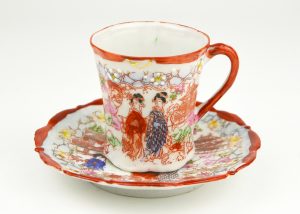
Nippon China refers to fine porcelain and ceramics produced in Japan between 1891 and 1921, a period when export goods were marked “Nippon,” the Japanese word for Japan. These elegant pieces were created primarily for Western markets, showcasing exquisite craftsmanship, delicate hand-painted designs, and vibrant colors that reflected both Japanese artistry and Western tastes.
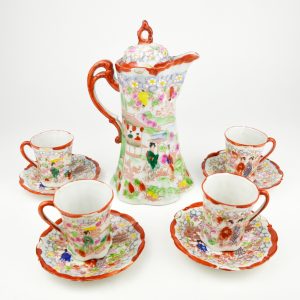
BUY NOW! Gorgeous colorful piece of Nippon porcelain. Hand-painted with gold gilding and white enamel. Manufacturer’s mark, “Made in Japan.” Approximate dimensions: CHOCOLATE POT with lid: 5 1/8″ (max diameter) x 9 1/2″ (total height); CUPS: 2 1/2″ (max diameter), 3 1/4″ (max diameter with handle) x 2 3/4″ (height); SAUCER: 5″ (max diameter). c. antique or vintage. Made in Japan.

During this era, Nippon China was produced by several renowned companies, including Noritake, Morimura Brothers, and others. The wares ranged from ornate vases and tea sets to intricate figurines and tableware. Common decorative styles included raised gold moriage, scenic landscapes, florals, and elaborate gilding, often highlighted by soft pastel glazes or deep cobalt blues.

After 1921, U.S. import regulations required goods from Japan to be marked “Japan” or “Made in Japan,” officially ending the “Nippon” mark era. Today, genuine Nippon-marked pieces are highly collectible, valued for their beauty, historical significance, and the exceptional skill of the artisans who created them.
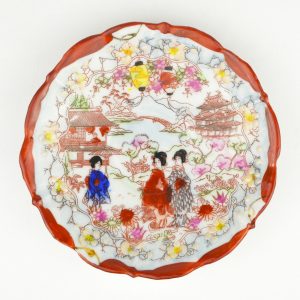
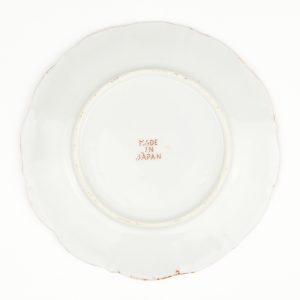
Collectors seek authentic markings and hand-painted quality when identifying true Nippon China, making each piece not just a functional item, but a cherished symbol of Japan’s cultural exchange and enduring artistic tradition.

Antique Chocolate Pots: Elegant Remnants of a Sweet Tradition

Antique chocolate pots are beautiful relics from a bygone era when drinking chocolate was a luxurious ritual rather than an everyday indulgence. Originating in Europe during the 17th century, these elegant vessels were designed specifically for preparing and serving hot chocolate—a fashionable beverage enjoyed by the wealthy.
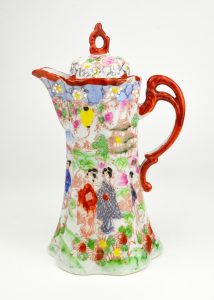
Unlike teapots or coffee pots, chocolate pots were crafted with distinct features. Most notably, they often included a hinged or removable lid with a hole for a wooden or metal whisk, called a “molinillo” or “muddler,” used to froth the chocolate mixture before serving. Their graceful spouts and ornate handles were designed for both function and beauty, often reflecting the artistry of the silversmiths or porcelain makers who produced them.

Materials ranged from silver and pewter to fine porcelain, with famous manufacturers like Limoges, Meissen, and Royal Vienna creating stunning examples. Many were richly decorated with gilding, hand-painted florals, or romantic scenes, making them both utilitarian and decorative.
Today, antique chocolate pots are prized collectibles. They offer a glimpse into historical dining customs and the evolution of European craftsmanship, serving as elegant reminders of how something as simple as a cup of chocolate once symbolized refinement, comfort, and social prestige.

This item is currently available in our eBay store.

References:

  1. Collector’s Encyclopedia of Nippon Porcelain by Joan Van Patten
  2. The Wonderful World of Nippon Porcelain by Kathy Wojciechowski
  3. Japanese Porcelain 1800-1950 by Nancy Schiffer
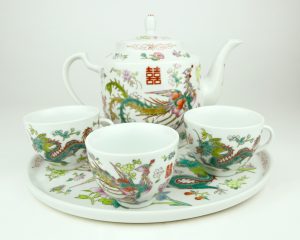
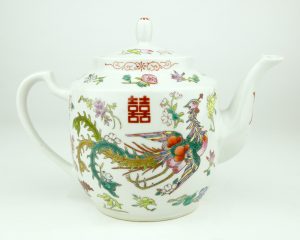
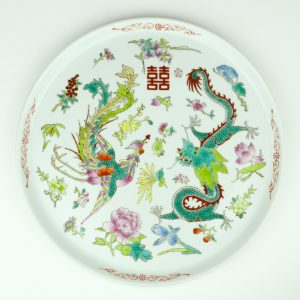
A Closer Look at Vintage Chinese Porcelain: Tea Set with Hand-Painted Dragon, Phoenix and Floral Design

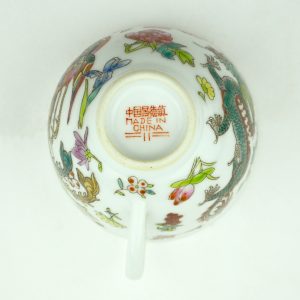
Chinese porcelain has long been admired for its craftsmanship, symbolism, and cultural depth. This hand-painted tea set from the 1980s—stamped “Made in China 11” with the Chinese characters for Zhongguo Jingdezhen—is a perfect example of this enduring tradition. Produced in Jingdezhen, often called the “Porcelain Capital of the World,” this tea set reflects both centuries-old techniques and the decorative style popular during China’s late 20th-century export era.

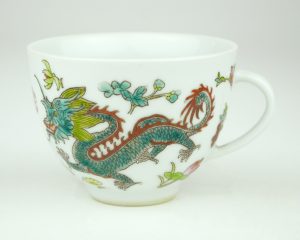
SOLD OUT Gorgeous colorful vintage tea set depicting a dragon and phoenix design surrounded by many different flowers such as peony, iris and water lily. Hand-painted enamel on porcelain. This tea set includes a teapot, tray and three (3) tea cups. Stamped, “Made in China 11” with the Chinese characters for Zhongguo (China) Jingdezhen. c. 1980s. Made in China.

What makes this tea set especially captivating is its dynamic combination of dragon, phoenix and floral motifs. The dragon and phoenix, two of the most iconic symbols in Chinese art, traditionally represent power, harmony, and auspicious union. The dragon embodies strength, good fortune, and authority, while the phoenix symbolizes grace, renewal, and peace. When paired together, they often signify balance, marital harmony, and the blending of yin and yang. Surrounding these mythic creatures, the floral elements soften the composition, adding elegance and natural beauty to each piece.

The hand-painted details reveal a skilled artisan’s touch—brushstrokes that bring the creatures to life with fluid movement and vivid expression. Though produced for export during the 1980s, a period when Chinese decorative wares became widely accessible, this set still carries the artistic hallmarks of Jingdezhen’s long history: thin porcelain walls, a smooth glazed finish, and vibrant enamel colors.

The base stamp, including the English “Made in China 11” and the Chinese Zhongguo Jingdezhen, helps date the set to the reform-era decades when China increased global trade. Today, tea sets like this offer both collectible value and a tangible connection to cultural heritage. Whether displayed or used for brewing tea, this piece blends artistry, symbolism, and history—an elegant reminder of why Jingdezhen porcelain continues to fascinate collectors around the world.

Items like this are currently available in our eBay store.

References:

  1. How to Read Chinese Ceramics (The Metropolitan Museum of Art) by Denise Patry Leidy
  2. Illustrated Brief History of Chinese Porcelain: History – Culture – Aesthetics by Guimei Yang and Hardie Alison
  3. Chinese Art: A Guide to Motifs and Visual Imagery by Patricia Bjaaland Welch