Chinese porcelain has long been admired for its craftsmanship, symbolism, and cultural depth. This hand-painted tea set from the 1980s—stamped “Made in China 11” with the Chinese characters for Zhongguo Jingdezhen—is a perfect example of this enduring tradition. Produced in Jingdezhen, often called the “Porcelain Capital of the World,” this tea set reflects both centuries-old techniques and the decorative style popular during China’s late 20th-century export era.
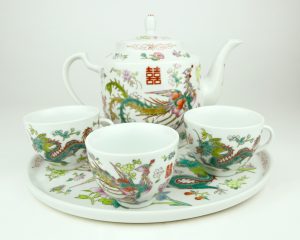
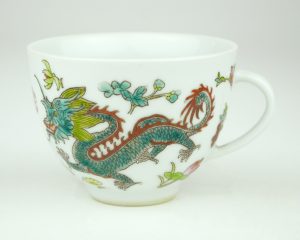
What makes this tea set especially captivating is its dynamic combination of dragon, phoenix and floral motifs. The dragon and phoenix, two of the most iconic symbols in Chinese art, traditionally represent power, harmony, and auspicious union. The dragon embodies strength, good fortune, and authority, while the phoenix symbolizes grace, renewal, and peace. When paired together, they often signify balance, marital harmony, and the blending of yin and yang. Surrounding these mythic creatures, the floral elements soften the composition, adding elegance and natural beauty to each piece.
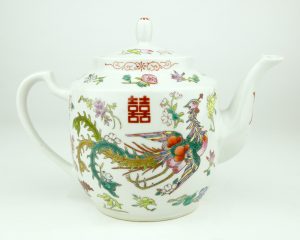
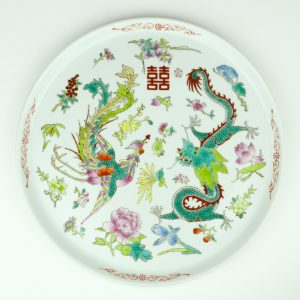
The hand-painted details reveal a skilled artisan’s touch—brushstrokes that bring the creatures to life with fluid movement and vivid expression. Though produced for export during the 1980s, a period when Chinese decorative wares became widely accessible, this set still carries the artistic hallmarks of Jingdezhen’s long history: thin porcelain walls, a smooth glazed finish, and vibrant enamel colors.
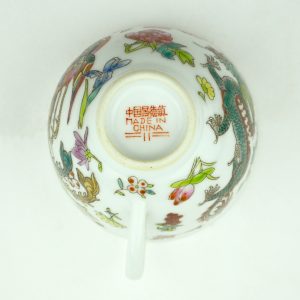
The base stamp, including the English “Made in China 11” and the Chinese Zhongguo Jingdezhen, helps date the set to the reform-era decades when China increased global trade. Today, tea sets like this offer both collectible value and a tangible connection to cultural heritage. Whether displayed or used for brewing tea, this piece blends artistry, symbolism, and history—an elegant reminder of why Jingdezhen porcelain continues to fascinate collectors around the world.
Items like this are currently available in our eBay store.
References:
- How to Read Chinese Ceramics (The Metropolitan Museum of Art) by Denise Patry Leidy
- Illustrated Brief History of Chinese Porcelain: History – Culture – Aesthetics by Guimei Yang and Hardie Alison
- Chinese Art: A Guide to Motifs and Visual Imagery by Patricia Bjaaland Welch