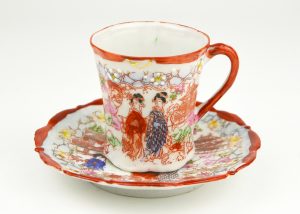
Nippon China: A Legacy of Japanese Craftsmanship – Set of Nippon Chocolate Pot with Four (4) Cups and Saucers

Nippon China refers to fine porcelain and ceramics produced in Japan between 1891 and 1921, a period when export goods were marked “Nippon,” the Japanese word for Japan. These elegant pieces were created primarily for Western markets, showcasing exquisite craftsmanship, delicate hand-painted designs, and vibrant colors that reflected both Japanese artistry and Western tastes.
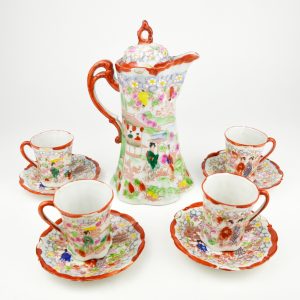
BUY NOW! Gorgeous colorful piece of Nippon porcelain. Hand-painted with gold gilding and white enamel. Manufacturer’s mark, “Made in Japan.” Approximate dimensions: CHOCOLATE POT with lid: 5 1/8″ (max diameter) x 9 1/2″ (total height); CUPS: 2 1/2″ (max diameter), 3 1/4″ (max diameter with handle) x 2 3/4″ (height); SAUCER: 5″ (max diameter). c. antique or vintage. Made in Japan.

During this era, Nippon China was produced by several renowned companies, including Noritake, Morimura Brothers, and others. The wares ranged from ornate vases and tea sets to intricate figurines and tableware. Common decorative styles included raised gold moriage, scenic landscapes, florals, and elaborate gilding, often highlighted by soft pastel glazes or deep cobalt blues.

After 1921, U.S. import regulations required goods from Japan to be marked “Japan” or “Made in Japan,” officially ending the “Nippon” mark era. Today, genuine Nippon-marked pieces are highly collectible, valued for their beauty, historical significance, and the exceptional skill of the artisans who created them.
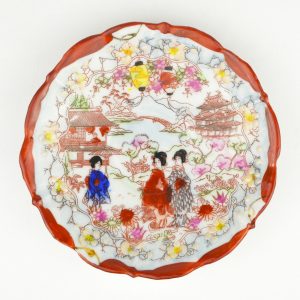
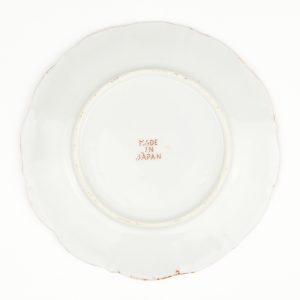
Collectors seek authentic markings and hand-painted quality when identifying true Nippon China, making each piece not just a functional item, but a cherished symbol of Japan’s cultural exchange and enduring artistic tradition.

Antique Chocolate Pots: Elegant Remnants of a Sweet Tradition

Antique chocolate pots are beautiful relics from a bygone era when drinking chocolate was a luxurious ritual rather than an everyday indulgence. Originating in Europe during the 17th century, these elegant vessels were designed specifically for preparing and serving hot chocolate—a fashionable beverage enjoyed by the wealthy.
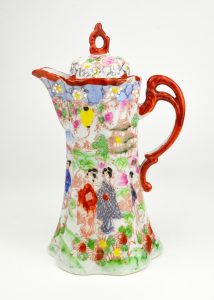
Unlike teapots or coffee pots, chocolate pots were crafted with distinct features. Most notably, they often included a hinged or removable lid with a hole for a wooden or metal whisk, called a “molinillo” or “muddler,” used to froth the chocolate mixture before serving. Their graceful spouts and ornate handles were designed for both function and beauty, often reflecting the artistry of the silversmiths or porcelain makers who produced them.

Materials ranged from silver and pewter to fine porcelain, with famous manufacturers like Limoges, Meissen, and Royal Vienna creating stunning examples. Many were richly decorated with gilding, hand-painted florals, or romantic scenes, making them both utilitarian and decorative.
Today, antique chocolate pots are prized collectibles. They offer a glimpse into historical dining customs and the evolution of European craftsmanship, serving as elegant reminders of how something as simple as a cup of chocolate once symbolized refinement, comfort, and social prestige.

This item is currently available in our eBay store.

References:

  1. Collector’s Encyclopedia of Nippon Porcelain by Joan Van Patten
  2. The Wonderful World of Nippon Porcelain by Kathy Wojciechowski
  3. Japanese Porcelain 1800-1950 by Nancy Schiffer
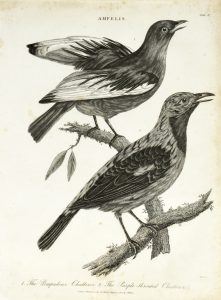
J Wilkes Lithograph Print Scientific Illustration of Bird Wildlife: Chatterers (Ampelis) and Rollers (Coracias)

J. Wilkes lithograph prints stand as exquisite examples of 19th-century scientific illustration, capturing the grace, detail, and diversity of avian wildlife. Produced during an era when natural history exploration was flourishing, these prints combined artistry with scientific precision, offering both aesthetic beauty and educational value.

SOLD OUT Antique lithograph print of Ampelis (genus) birds, purple-throated chatterer and Pompadour chatterer by J. Wilkes. Scientific illustration with exquisite detail. Great piece for a birder or wildlife biologist. These birds are native to South America (Brazil, French Guiana). Print text: “Ampelis. Plate II. 1. The Pompadour Chatterer. 2. The Purple-throated Chatterer. Pass sc. London. Published as the Act directs, August 22, 1807, by J. Wilkes.” Approximate dimensions: PRINT: 12″ (length) x 10″ (width); FRAME: 18″ (length) x 15″ (width). c. early 1800s. Printed in England.

J. Wilkes, often associated with natural history publications of the late 18th and early 19th centuries, created finely detailed lithographs that depicted a wide range of bird species from around the world. Each print showcased the artist’s meticulous attention to anatomy, coloration, and posture—traits essential for accurate scientific documentation before the advent of modern photography. The lithographs were typically hand-colored after printing, adding depth and vibrancy that brought each bird to life on the page.

These works were not merely artistic renderings; they were visual records intended to advance the understanding of ornithology. The prints often accompanied scientific texts, helping scholars and enthusiasts identify species and study their physical characteristics. Many feature birds set against naturalistic backgrounds—branches, nests, or subtle landscapes—creating compositions that balanced realism with elegance.

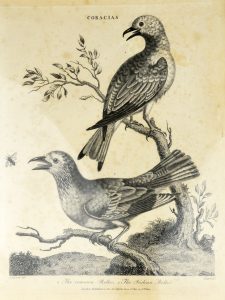
SOLD OUT Second print: Antique lithograph print of Coracias (genus) birds, common roller and Indian roller by J. Wilkes. These birds are native to Europe and South Asia. Print text: “Coracias. G. Edwards del. J. Pafs Sculp. 1. The Common Roller. 2. The Indian Roller. London. Published as the Act directs, June 4th, 1802, by J. Wilkes.” Approximate dimensions: PRINT: 12″ (length) x 10″ (width); FRAME: 18″ (length) x 15″ (width). c. early 1800s. Printed in England.

Today, J. Wilkes lithographs are highly sought after by collectors, natural history enthusiasts, and art historians alike. Their enduring appeal lies in the harmonious blend of art and science, reflecting a period when exploration and discovery were central to human curiosity. Original Wilkes prints, often printed on fine rag paper and preserved in archival conditions, continue to adorn galleries, libraries, and private collections worldwide.

As authentic artifacts of early ornithological study, J. Wilkes’ bird lithographs remain a testament to the enduring beauty of nature seen through the eyes of a skilled artist and naturalist—preserving the wonder of wildlife for generations to come.

Items like this are available in our eBay store.

References:

  1. Ornithography: An Illustrated Guide to Bird Lore & Symbolism by Jessica Roux
  2. The Bird: The Great Age of Avian Illustration by Philip Kennedy
  3. The Birds of America by John James Audubon & David Allen Sibley
  4. The History of British Guiana by Henry G. Dalton, p. 395-6